
Strong Governance Requires Strong Relationships
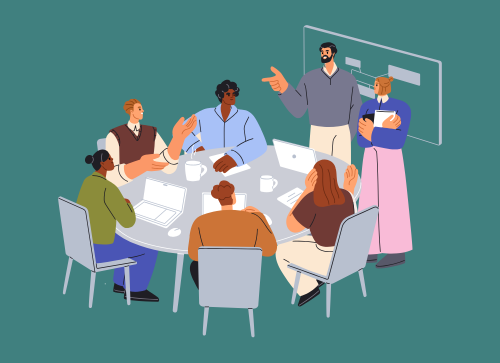
Over the last several months, I've spent a lot of time in conversations with nonprofit CEOs, board chairs, campaign volunteers and community leaders. Some organizations are entering strategic planning processes. Others are evaluating campaign readiness, navigating leadership transitions or simply asking what the future should look like in a rapidly changing environment.
No matter where the conversation begins, we often arrive at the same place: the board table – because whether an organization is planning its future, preparing for a campaign or navigating leadership transition, the quality of governance shapes what is possible.
Along those lines, whenever I think about the strongest nonprofit organizations I've worked with and served on, I rarely think first about their budgets, campaigns or strategic plans. I think about the relationships between board members and staff. I think about the trust that exists around the table. I think about leaders on both sides of it who are willing to have candid conversations, ask difficult questions and remain focused on mission, even when the path forward is uncertain.
In many ways, governance is stewardship in action: the ongoing work of providing oversight, setting direction, asking the right questions and ensuring the organization remains accountable to its mission. And that work happens through relationships.
At M. Gale, we often find that organizations enter a planning process focused important outcomes like growth, fundraising or new opportunities. Those conversations are important, and achieving those outcomes requires more than a strong plan. It requires leadership that is aligned around a shared vision and a shared responsibility for advancing it.
This feels particularly important right now.
Many nonprofit organizations are experiencing some form of transition. Boards are welcoming new members. Executive leaders are preparing for succession. Communities are asking organizations to address increasingly complex challenges. Donors want to understand both impact and sustainability.
In moments like these, governance should not be viewed as a compliance exercise alone or a set of bylaws sitting on a shelf. It should be viewed as an opportunity to strengthen leadership, deepen engagement and create clarity around the organization's future.
One of the most encouraging things I continue to see is that board members genuinely want to help. They want to open doors, build relationships, advocate for the mission and support leadership. What they often need is a clearer understanding of where they can make the greatest contribution and how their role connects to the organization's larger vision.
That's why our approach at M. Gale begins with listening.
We always spend time understanding perspectives, identifying alignment and uncovering opportunities to strengthen leadership. The goal is creating stronger relationships, clearer roles and shared accountability among boards, staff, donors and community stakeholders so organizations can deliver on their missions more effectively.
The best boards I've seen aren't made up of people who have all the answers. They're made up of people who are committed to learning together, leading together and investing together in the future of the organization.
And in a season when so many nonprofits are navigating change, that kind of leadership has never been more important.
A Few Key Dimensions of Governance
Governance is more than oversight.
The strongest boards provide meaningful oversight while also helping create strategic alignment, asking important questions and supporting organizational momentum.
Strong governance requires clarity.
Board members need to understand their responsibilities, the organization's priorities and where their leadership can make the greatest contribution.
Relationships make effective governance possible.
Trust, candor, communication and shared accountability allow boards and staff to navigate difficult decisions and stay focused on mission.
So WHAT does it all mean? As you think about your organization's future, don't just ask whether your board is fulfilling its responsibilities.
Ask tougher questions:
Is our board building meaningful relationships with staff, donors and the community?
Are we creating space for strategic conversations, not just operational updates?
Do our board members clearly understand how they can contribute to advancing the mission?
Are we preparing our organization for the opportunities and challenges ahead?
Because the future of nonprofit leadership won't be built through strategy alone. It requires clear roles, thoughtful oversight, shared accountability and leaders willing to steward the mission together. And all of that depends, at some level, on the quality of the relationships around the table.
That's where strong governance begins.
With a commitment to strengthening nonprofit leadership,
Marcus Hicks
As a seasoned management professional, Marcus Hicks has extensive experience in driving organizational growth and operational excellence across diverse sectors, including retail and non-profit. His expertise spans strategic planning, project management and team leadership, consistently exceeding expectations in delivering complex projects on time and within budget.